EV Charging Infrastructure in Portugal and Spain Sees Massive Expansion
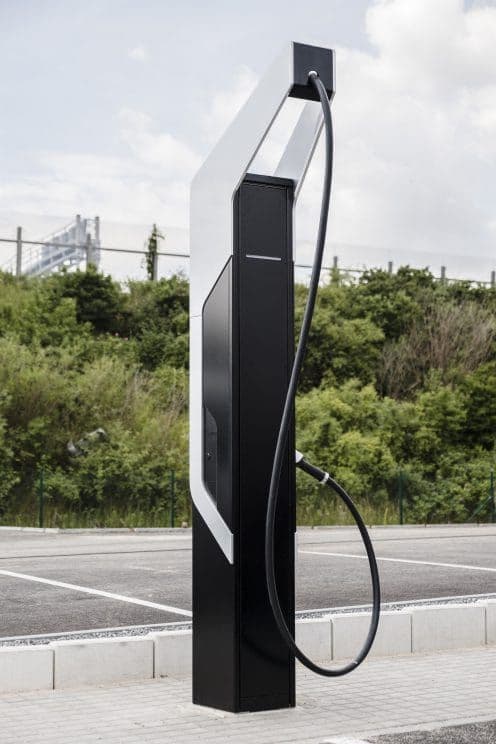
The Iberian EV Charging Revolution
Range anxiety has long been the biggest barrier to electric vehicle adoption in Southern Europe. That is changing rapidly as Portugal and Spain embark on their most ambitious EV charging infrastructure expansion to date, with plans to install over 12,000 new public charging points across the Iberian Peninsula by the end of 2026.
The push comes as EU regulations tighten requirements for charging availability along major transport corridors. Both countries are investing heavily to meet these targets and position themselves as leaders in the European green transport transition.
Portugal's Charging Roadmap
Portugal currently has approximately 6,500 public charging points, a figure the government aims to nearly double within the next 18 months. The national plan prioritises three key areas: motorway corridors, urban centres, and rural municipalities that currently have little or no charging infrastructure.
Mobi.E, the Portuguese electric mobility network, has streamlined the process for operators to install and register new chargers. The government has also introduced tax incentives for businesses that install charging stations on their premises, and simplified planning permissions for residential charging installations in apartment buildings.
Along the A1 motorway connecting Lisbon to Porto, new ultra-fast charging hubs capable of delivering 350 kW are being installed at service stations every 60 kilometres. These stations can charge a compatible EV from 10 to 80 percent in roughly 15 minutes, making long-distance travel practical for electric car owners.
Cross-Border Corridors
One of the most significant developments is the coordinated approach between Portugal and Spain for cross-border charging infrastructure. The Iberian Charging Corridor project, funded partly by the EU's Connecting Europe Facility, is ensuring that drivers can travel seamlessly between the two countries without worrying about charging availability.
Key routes between Lisbon and Madrid, Porto and Vigo, and the Algarve to Seville are being equipped with standardised fast-charging stations that accept any European payment method and charging card. This interoperability has been a pain point for EV drivers, who previously had to juggle multiple apps and subscriptions.
The Role of Private Investment
While government funding provides the foundation, private companies are driving much of the expansion. Tesla has expanded its Supercharger network across Portugal, with 15 new locations planned for 2026. Ionity, the pan-European charging network backed by major automakers, is adding 20 new high-power charging parks in Iberia.
Portuguese energy companies EDP and Galp are also significant players. EDP's charging subsidiary has committed to installing 3,000 new points across Portugal and Spain, while Galp is converting traditional fuel stations to include fast-charging bays alongside petrol and diesel pumps.
Startups are entering the market too. Several Portuguese companies are developing smart charging solutions that optimise power delivery based on grid demand, helping to prevent the strain that thousands of simultaneous charging sessions could place on the electrical network.
Challenges and Growing Pains
The expansion is not without difficulties. Grid capacity remains a concern in some rural areas where the electrical infrastructure was not designed to handle high-power charging demands. Upgrading substations and power lines adds cost and delays to installation timelines.
Permitting processes, while improved, still vary significantly between municipalities. Some local authorities process applications in weeks, while others take months. Industry groups have called for a fully standardised national permitting framework.
The user experience also needs work. Charging station reliability rates in Portugal currently hover around 92 percent, meaning roughly one in twelve stations may be out of service at any given time. Operators are investing in remote monitoring and predictive maintenance to improve uptime.
What This Means for EV Buyers
For consumers considering an electric vehicle purchase in Portugal, the charging landscape is improving fast enough to make the transition practical for most use cases. Urban residents with home charging will find public infrastructure more than adequate for occasional longer trips, and the growing network along motorways makes intercity travel increasingly convenient.
The combination of government incentives for EV purchases, expanding charging infrastructure, and falling battery prices means that 2026 may well be the tipping point for mass EV adoption on the Iberian Peninsula.