Carbon Capture Goes Industrial: The $50 Billion Bet on Pulling CO2 From the Sky
The largest machine ever built to remove carbon dioxide from the atmosphere has begun operations in West Texas. Occidental Petroleum's STRATOS facility, powered by a dedicated solar farm, can capture 500,000 tons of CO2 per year — equivalent to the annual emissions of 100,000 cars. It's the first of a new generation of industrial-scale direct air capture (DAC) plants that collectively represent a $50 billion bet that technology can help clean up humanity's carbon mess.
How Direct Air Capture Works
DAC plants use massive arrays of fans to draw ambient air through chemical filters that selectively bind CO2 molecules. The captured CO2 is then heated to release it from the filters (regenerating them for reuse), compressed, and either stored permanently underground in geological formations or used in industrial processes.
The chemistry is straightforward — it's essentially the same process trees use, scaled up with industrial engineering. The challenge is economics and energy. Current DAC technology requires approximately 6-9 gigajoules of energy to capture one ton of CO2, and the atmospheric concentration of CO2 (about 425 parts per million) means vast quantities of air must be processed.
The Major Players
Climeworks, the Swiss pioneer that built the world's first commercial DAC plant in Iceland in 2021, is constructing "Mammoth" — a facility 10x larger than its Orca predecessor, capable of capturing 36,000 tons annually. Their technology uses solid sorbent filters and geothermal energy for the heating cycle, making it one of the most energy-efficient approaches.
Carbon Engineering, acquired by Occidental Petroleum for $1.1 billion, developed the liquid solvent approach used in the STRATOS plant. Their technology processes air through a potassium hydroxide solution, producing a calcium carbonate pelite that is heated to release pure CO2. The approach handles larger volumes than solid sorbent methods, making it better suited for industrial-scale facilities.
CarbonCapture Inc. (backed by $500 million from BlackRock and Saudi Aramco) is building a 5-million-ton-per-year facility in Wyoming — the most ambitious DAC project announced to date. Their modular design uses standardized capture units that can be manufactured in factories and deployed like shipping containers, potentially driving costs down through mass production.
The Cost Problem
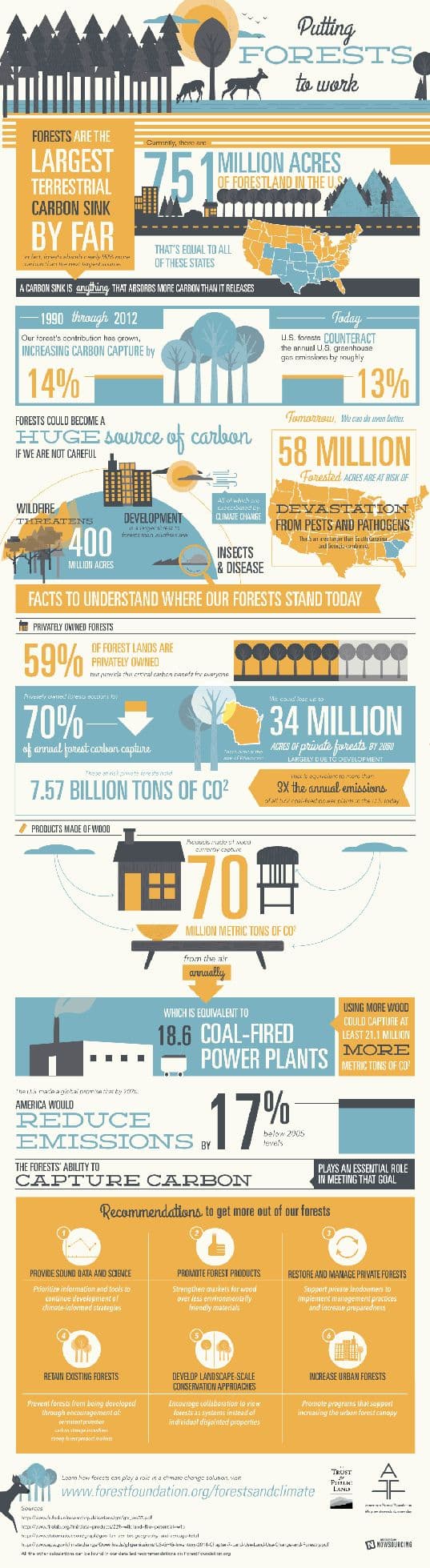
Current DAC costs range from $400-600 per ton of CO2 captured — far above the $100-150 per ton threshold that most analysts consider necessary for climate-meaningful scale. By comparison, planting trees captures carbon at roughly $10-50 per ton, though with lower permanence and greater land requirements.
The industry's roadmap to cost reduction depends on three factors: cheaper renewable energy (solar and wind costs continue to decline), improved sorbent chemistry (next-generation materials that require less energy to regenerate), and manufacturing scale (building capture units in factories rather than custom-engineering each facility).
Climeworks targets $250/ton by 2030 and $100/ton by 2035. Carbon Engineering claims its next-generation plants will achieve $200/ton at scale. Whether these targets are achievable remains debated, but the trajectory is clearly downward.
The Business Model
Who pays $400+ to remove a ton of CO2? Currently, three customer categories: corporations purchasing carbon removal credits to meet net-zero pledges (Microsoft, Stripe, and Shopify are the largest buyers), governments providing subsidies (the US Inflation Reduction Act offers $180/ton tax credits for DAC with geological storage), and the oil industry using captured CO2 for enhanced oil recovery (a use case that critics argue undermines the climate benefit).
The voluntary carbon removal market has grown to $4 billion annually, with DAC credits commanding premium prices because of their measurability and permanence — unlike forestry offsets, a ton of CO2 stored in geological formations stays there for thousands of years.
The Criticism
Environmental groups are deeply divided on DAC. Supporters argue that even with aggressive emissions cuts, atmospheric CO2 levels are already dangerously high and will need active removal. The IPCC's scenarios for limiting warming to 1.5°C all include significant carbon removal.
Critics counter that DAC is a "moral hazard" — that its existence gives fossil fuel companies and governments permission to delay emissions reductions by promising future cleanup. The energy required for DAC at meaningful scale (removing 10 billion tons per year would require roughly 10% of current global electricity generation) raises questions about whether that energy would be better used displacing fossil fuels directly.
The Scale Challenge
Humanity emits approximately 37 billion tons of CO2 annually. Current global DAC capacity is approximately 1 million tons per year — 0.003% of annual emissions. Even the most aggressive deployment scenarios wouldn't reach 1 billion tons of annual capture before 2040.
DAC alone cannot solve climate change. But as one tool among many — alongside emissions reduction, renewable energy deployment, and natural carbon sinks — it represents a capability that didn't exist a decade ago and is improving rapidly. The $50 billion flowing into the sector suggests that investors, at least, believe the technology will eventually deliver on its promise.
Whether that belief proves prescient or becomes one of the most expensive false hopes in industrial history will depend on the next five years of cost reduction. The clock, like the climate, isn't waiting.