The Global Wave: 15 Countries Now Ban or Restrict Smartphones for Children Under 14
When Australia passed the Online Safety Amendment Act in late 2024, banning social media access for children under 16 and heavily restricting smartphone use for those under 14, critics called it an overreaction. Eighteen months later, 14 additional countries have enacted similar legislation, and the results from Australia's early implementation are silencing the skeptics.
The Australian Results
Data from Australia's first year of implementation shows measurable improvements across multiple metrics. Self-reported anxiety among 12-15-year-olds dropped 22%. Average daily screen time for the age group fell from 6.8 hours to 2.4 hours. Most remarkably, face-to-face social interaction — measured through survey data and school counselor reports — increased by 45%. Sports participation rose 28%. Library book borrowing among under-16s increased for the first time in 15 years.
"We were told kids would find workarounds and the law would be unenforceable," said Australia's eSafety Commissioner. "Some did. But the social norm shifted. When most of your friends don't have Instagram, the pressure to be on it evaporates."
The Global Spread
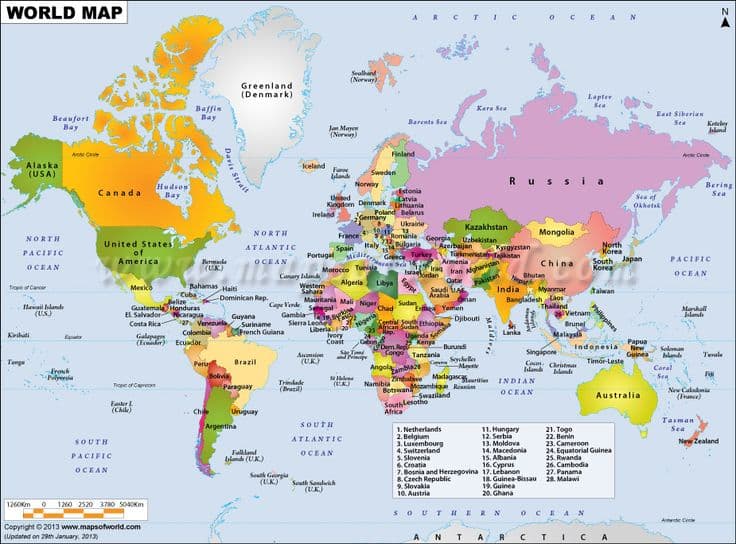
The countries that have followed span every continent and political system. France expanded its existing school phone ban to a full social media restriction for under-15s. South Korea implemented a "digital curfew" limiting minors' device usage between 10 PM and 6 AM, enforced through mandatory age-verification software. The UK's Online Safety Act now requires age verification for social media access, effectively restricting under-13s. Japan, Singapore, Norway, Italy, Brazil, India, Spain, Ireland, Netherlands, and New Zealand have all enacted varying degrees of restriction.
The approaches differ in specifics but share a common framework: restrictions on social media access below a certain age (typically 13-16), requirements for parental consent for smartphone purchases for minors, and mandated digital literacy education in schools. Enforcement mechanisms range from app store restrictions to ISP-level filtering to financial penalties for platforms that fail to verify user ages.
Big Tech's Response
Meta, TikTok, and Snapchat have shifted from opposition to reluctant compliance. Meta now offers "Teen Accounts" with default restrictions on messaging, content recommendations, and usage time. TikTok implemented a verified age gate that requires government ID for account creation. These changes were driven not by altruism but by the commercial reality of operating in markets where non-compliance means being blocked entirely.
Apple and Google have introduced "Junior Mode" for their mobile operating systems, allowing parents to configure devices with restricted app installation, filtered web browsing, and enforced screen time limits. Both companies frame the features as empowering parental choice — a diplomatic position that avoids alienating either regulators or their user base.
The Debate Continues
Civil liberties organizations remain concerned. The Electronic Frontier Foundation has argued that age-verification requirements inherently compromise privacy for all users, not just children. Free speech advocates warn that restricting minors' access to information sets a precedent that could be expanded to other groups.
Parents, however, are overwhelmingly supportive. A Pew Research survey found that 78% of American parents favor some form of restriction on children's smartphone access, and 62% support Australia-style social media age restrictions. The US has not yet passed federal legislation, though bills are pending in both chambers of Congress and 23 states have enacted their own restrictions.
The smartphone was put in children's hands without much thought about consequences. Two decades later, the evidence of harm has become impossible to ignore, and the world is responding — imperfectly, but decisively. The experiment of unrestricted children's access to the internet's most addictive platforms is ending. What replaces it will define a generation.