Steam Deck 2 With OLED Display — Valve's Next Handheld Takes Shape
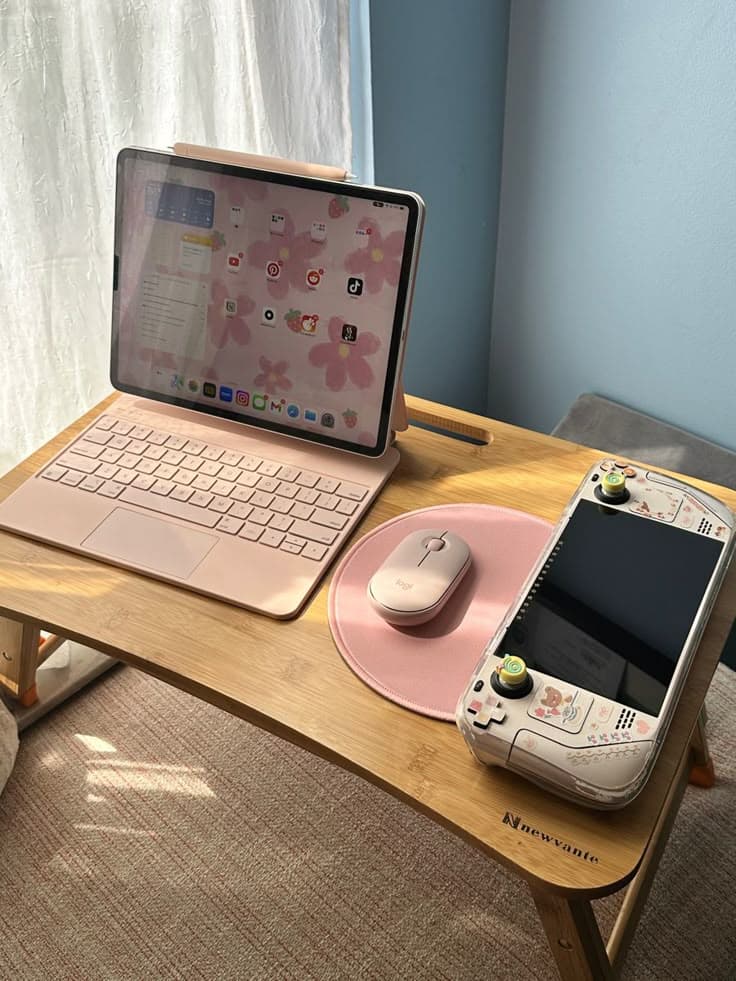
Valve Prepares Its Next Move
The original Steam Deck proved that PC gaming on a handheld device was not only possible but genuinely enjoyable. Since its launch, it has sold millions of units worldwide and spawned an entire category of PC gaming handhelds from competitors including Asus, Lenovo, and MSI. Now, credible leaks and Valve's own hints suggest that the Steam Deck 2 is approaching its reveal.
While Valve has not officially announced the device, enough information has surfaced from supply chain reports, patent filings, and comments from Valve employees to paint a clear picture of what to expect.
Display and Design
The most significant upgrade appears to be the display. Multiple sources indicate that the Steam Deck 2 will feature a 7.4-inch OLED panel, slightly larger than the original's 7-inch LCD. The OLED screen is expected to offer a 90 Hz refresh rate, HDR support, and significantly improved colour accuracy and contrast.
Valve already offered an OLED variant of the original Steam Deck, and user reception was overwhelmingly positive. Making OLED the standard for the sequel seems like a natural progression.
The overall form factor is expected to remain similar, with Valve opting for ergonomic refinements rather than a radical redesign. The trackpads, a distinctive feature that many users appreciate, will reportedly be retained and improved with better haptic feedback.
Performance Upgrade
At the heart of the Steam Deck 2 sits a custom AMD APU based on the Zen 5 CPU architecture and RDNA 4 graphics. This represents a generational leap over the original's Zen 2 and RDNA 2 combination, promising roughly double the GPU performance and significant improvements in CPU throughput.
The new chip should enable the Steam Deck 2 to run current AAA titles at medium to high settings at native resolution, a substantial improvement over the original, which often required low settings and FSR upscaling for demanding games.
LPDDR5X memory at 7500 MHz is expected, providing increased bandwidth that will benefit both gaming performance and the integrated graphics. Storage options will likely include 256 GB and 1 TB NVMe SSD configurations.
Battery Life Improvements
One of the original Steam Deck's weaknesses was battery life during demanding games, which could drop to under two hours. The Steam Deck 2 is expected to address this with a larger battery cell and the improved power efficiency of AMD's newer architecture.
Estimates from supply chain sources suggest a 55 to 60 watt-hour battery, compared to the original's 40 watt-hour cell. Combined with the more efficient APU, real-world battery life should reach three to four hours during intensive gaming and significantly longer for lighter titles and media consumption.
Software and Compatibility
SteamOS 4.0 is expected to launch alongside the Steam Deck 2. Built on a newer Arch Linux base, it will feature improved compatibility with Windows games through an updated version of Proton, Valve's compatibility layer. The Steam Deck Verified programme will continue, with Valve reportedly aiming for over 15,000 verified titles at launch.
Perhaps more significantly, Valve is rumoured to be exploring ways to make SteamOS available for competing handheld devices, positioning it as the Android of PC gaming handhelds. This could create a unified software ecosystem that benefits both Valve and consumers.
European Availability and Pricing
The original Steam Deck launched in Europe with limited availability and significant shipping delays. Valve has since expanded its European distribution infrastructure, and the Steam Deck 2 is expected to be available across EU markets from day one.
Pricing remains the biggest unknown. The original Steam Deck started at 349 euros in Europe, and industry analysts expect the sequel to launch at a similar or slightly higher starting price, likely between 399 and 449 euros for the base model. Valve has historically prioritised competitive pricing, sometimes at the expense of margins, and is expected to maintain this approach.
European buyers will be able to purchase directly from Steam's online store, and Valve is reportedly in discussions with physical retailers for in-store availability in select markets.
The Competition
The handheld PC gaming market has grown significantly since the original Steam Deck launched. The Asus ROG Ally 2, Lenovo Legion Go 2, and MSI Claw 2 all offer compelling alternatives with Windows-based operating systems. However, Valve's tight hardware-software integration and its massive Steam library give the Steam Deck 2 a significant advantage.
For European gamers looking for a portable PC gaming solution, the Steam Deck 2 appears poised to remain the device to beat. The combination of a proven software ecosystem, competitive pricing, and meaningful hardware upgrades makes it the most anticipated handheld of the year.