IBM Unveils 4,000-Qubit Quantum Processor, Claims "Quantum Advantage" in Drug Discovery
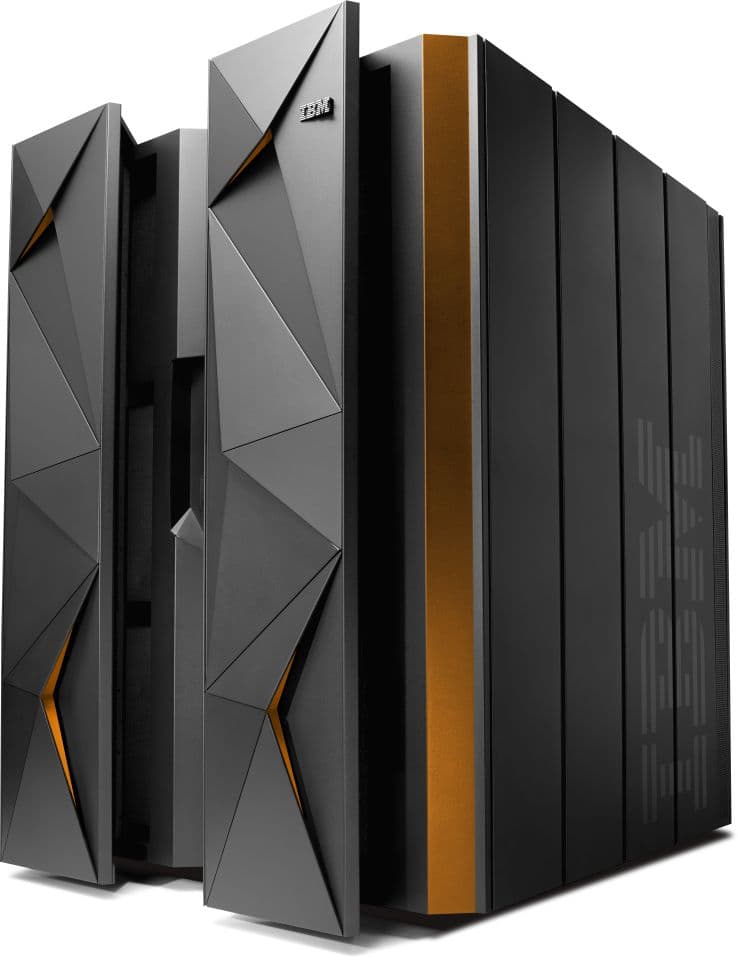
IBM has unveiled Condor 2, a 4,158-qubit quantum processor that the company claims has achieved "practical quantum advantage" — solving a real-world molecular simulation problem faster and more accurately than any classical supercomputer could. If verified by independent researchers, this represents the moment quantum computing transitions from theoretical promise to practical tool.
The Breakthrough
The specific problem: simulating the binding interactions between a drug candidate molecule and a target protein with full quantum mechanical accuracy. Classical computers approximate these interactions using density functional theory (DFT), which works well for small molecules but breaks down for the complex, multi-electron systems that characterize most drug targets. Condor 2 performed the full quantum simulation in 14 hours — a calculation IBM estimates would take the world's fastest supercomputer approximately 47,000 years.
The practical implication is enormous. Drug discovery currently involves testing thousands of molecular candidates experimentally because computational predictions aren't accurate enough. If quantum simulation can reliably predict which molecules will bind to targets, the drug development timeline could shrink from 10-12 years to 3-5 years, with corresponding cost reductions from $2.6 billion per approved drug to potentially under $500 million.
Technical Details
Condor 2 uses IBM's "Heron" qubit architecture, which achieves error rates below 0.1% per two-qubit gate — a 10x improvement over the previous generation. The processor operates at 15 millikelvin (colder than outer space) in a dilution refrigerator the size of a small car. IBM's new error mitigation software, called "Qiskit Runtime v3," combines multiple noisy quantum computations to extract accurate results — a technique that effectively multiplies the processor's useful qubit count.
The system is available through IBM Quantum Network, with Pfizer, Roche, and Merck already signed on as launch partners for drug discovery applications. Annual access contracts reportedly start at $15 million — expensive, but a fraction of the cost of a failed clinical trial.
The Competitive Landscape
Google's quantum team, which claimed quantum supremacy with a 72-qubit processor in 2019, is reportedly preparing its own 3,000+ qubit system for later this year. Microsoft's topological qubit approach has been slower to scale but promises inherently lower error rates. IonQ and Quantinuum continue to advance trapped-ion architectures that trade qubit count for higher fidelity.
IBM's head of quantum, Jay Gambetta, emphasized that the race isn't about qubit count alone: "It's about useful qubits doing useful work. Condor 2 is the first processor where every additional qubit genuinely contributes to solving a harder problem rather than just adding noise."
The quantum computing era hasn't arrived in full — general-purpose quantum computers remain years away. But for the specific problem of molecular simulation, Condor 2 suggests the future is already here.