Mesh WiFi 7 Systems Deliver Wired-Like Speed to Every Corner of Your Home
The promise of whole-home WiFi has always outrun the reality. Dead zones, buffering, and inconsistent speeds have plagued wireless networks since their inception. WiFi 7, formally known as IEEE 802.11be, is the first wireless standard that genuinely closes the gap with wired Ethernet for most home use cases. Combined with modern mesh architectures, the latest systems are transforming home networking from a constant frustration into something you simply stop thinking about.
What WiFi 7 Brings to the Table
WiFi 7 introduces three capabilities that represent meaningful improvements over WiFi 6E. Multi-Link Operation (MLO) allows a device to simultaneously transmit and receive across multiple frequency bands, 2.4 GHz, 5 GHz, and 6 GHz, at the same time. This is not band steering, where the router picks one band and hopes for the best. MLO aggregates bandwidth across bands, delivering higher throughput and lower latency than any single band can provide.
The standard also doubles maximum channel width to 320 MHz on the 6 GHz band, which translates to theoretical throughput above 46 Gbps. Real-world single-device speeds top out around 5 Gbps, but that is still fast enough to saturate most home internet connections several times over.
Finally, 4K-QAM modulation packs 20 percent more data into each transmission compared to WiFi 6's 1024-QAM. The improvement is most noticeable at close range where signal quality is high, but it contributes to the overall performance envelope that makes WiFi 7 feel noticeably faster in daily use.
The Mesh Advantage
A single WiFi 7 router, no matter how powerful, cannot defy physics. Walls, floors, and distance attenuate radio signals. Mesh systems solve this by distributing multiple access points throughout a home, each communicating with the others to create a seamless network. Your devices roam between nodes without dropping connections or changing network names.
The new generation of WiFi 7 mesh systems uses a dedicated 6 GHz backhaul link between nodes. This is critical because in earlier mesh systems, the backhaul traffic (data moving between mesh nodes) competed with client traffic for the same radio channels. With a dedicated 6 GHz backhaul and MLO aggregating client connections across the remaining bands, WiFi 7 mesh systems eliminate the performance penalty that made earlier mesh networks noticeably slower than standalone routers.
The Current Hardware
Eero's Max 7, Amazon's flagship mesh system, has been the bestseller in the category. A three-pack covers homes up to 7,500 square feet and delivers consistent speeds above 2 Gbps throughout the coverage area. At $1,150 for three nodes, it is expensive, but the performance justifies the price for households with demanding connectivity needs.
TP-Link's Deco BE85 offers comparable performance at a lower price point, with a three-pack retailing for around $900. It supports wired backhaul as a supplement to the wireless mesh, which is ideal for homes where Ethernet runs are available between floors.
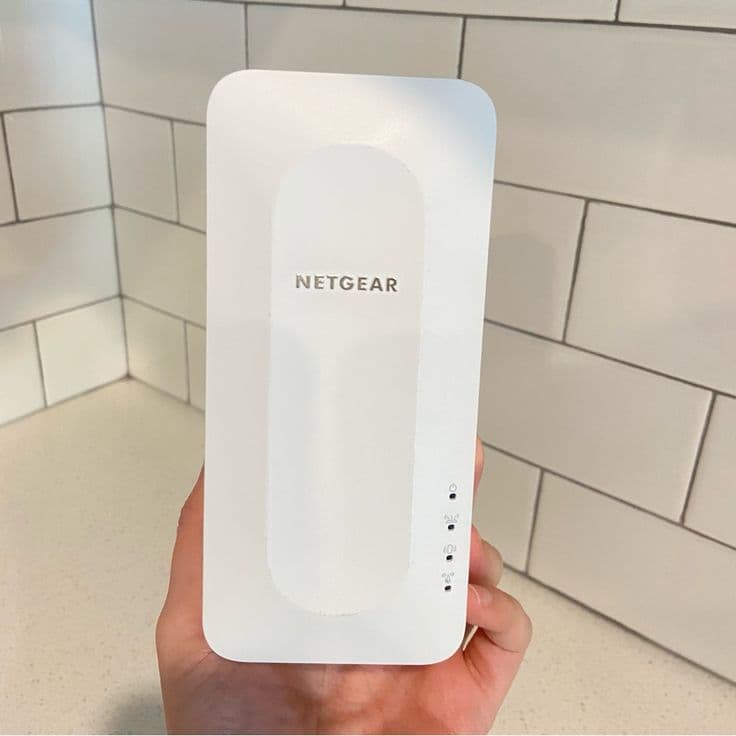
Netgear's Orbi 970 targets the premium market with a quad-band design that adds a second 5 GHz radio dedicated to backhaul. In testing, it delivers the most consistent performance of any consumer mesh system, maintaining above 1.5 Gbps at distances that would cripple a single-router setup.
For budget-conscious buyers, TP-Link's Deco BE63 provides WiFi 7 mesh capabilities in a two-pack for under $400, making the technology accessible without a four-figure investment.
Real-World Impact
The practical difference between WiFi 7 mesh and its predecessors shows up in three scenarios. First, latency-sensitive applications like video calls, cloud gaming, and real-time collaboration tools benefit from MLO's consistent sub-5ms latency. Video calls that used to stutter when someone else started a download now remain smooth because traffic is distributed across multiple links.
Second, high-bandwidth activities like 4K streaming to multiple TVs, large file transfers, and cloud backups run simultaneously without competing for throughput. A household with four people streaming, a teenager gaming, and a security camera system uploading footage can now operate without anyone noticing a slowdown.
Third, smart home device density is no longer a concern. WiFi 7's improved scheduling and reduced per-device overhead mean that networks with 50 or more connected devices, increasingly common with smart lights, sensors, cameras, and appliances, perform as well as networks with a handful of devices.
The Ethernet Question
For years, the standard advice for demanding use cases was to run Ethernet cables wherever possible. WiFi 7 makes that advice harder to justify. When wireless connections consistently deliver multi-gigabit speeds with single-digit millisecond latency, the hassle and expense of running cables through walls becomes difficult to rationalize for most users.
The exceptions remain: professional esports where every microsecond matters, dedicated NAS or server connections that benefit from 10 Gbps Ethernet, and industrial IoT applications requiring deterministic latency. For everyone else, WiFi 7 mesh is fast enough and reliable enough to be the only network you need.
Looking Forward
WiFi 7 mesh systems in 2026 are what WiFi 5 mesh systems promised in 2017: genuinely reliable whole-home wireless networking. The technology has finally caught up with the marketing. If your current network is more than three years old and you have upgraded to a gigabit or faster internet plan, a WiFi 7 mesh system is the single most impactful upgrade you can make to your home technology setup.