E-Ink Color Tablets Are Finally Ready for the Mainstream
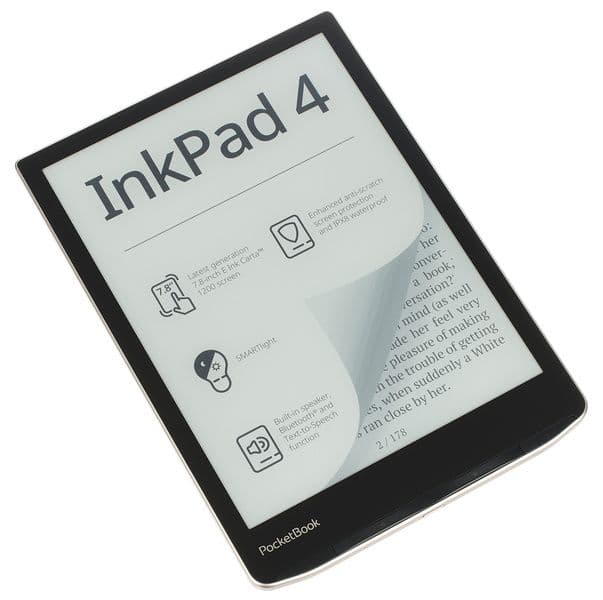
For years, e-ink tablets occupied a narrow niche: black-and-white e-readers for bookworms who wanted eye-friendly screens. That era is ending. With the arrival of E-Ink's Gallery 3 color technology and a wave of new hardware from Boox, reMarkable, and Kobo, color e-ink tablets are becoming genuine productivity and media devices.
What Makes Gallery 3 Different
Previous generations of color e-ink relied on a color filter array laid over a monochrome panel, which washed out colors and cut effective resolution. Gallery 3 takes a fundamentally different approach: it uses four colored pigment particles (cyan, magenta, yellow, and white) within each microcapsule. The result is a display that can render over 50,000 colors at full resolution, with refresh rates fast enough for note-taking and casual browsing.
In practice, Gallery 3 screens look closer to a high-quality magazine page than a traditional e-reader. Reds and blues appear saturated, and text remains razor-sharp even at small sizes. The technology is not competing with OLED for video playback, but for static and semi-static content it offers something no other display can: extended reading without eye fatigue and battery life measured in weeks rather than hours.
The Hardware Landscape in 2026
Boox has been the most aggressive manufacturer, shipping the Tab Ultra C Pro with a 10.3-inch Gallery 3 panel, a Qualcomm processor, and full Android 14 compatibility. It runs Kindle, Kobo, and virtually any Android app, which solves the ecosystem problem that held back earlier e-ink devices.
Kobo has entered the color market with the Libra Colour and a larger 10-inch Studio model, both running a curated reading-focused operating system. reMarkable, known for its minimalist writing tablets, is reportedly testing a color version of its Paper Pro line that would bring pen-on-paper note-taking into the color era.
Even Amazon is rumored to be developing a large-format color Kindle aimed at textbooks and comics, two categories where black-and-white screens have always felt limiting.
Why Battery Life Changes the Equation
The defining advantage of e-ink remains power consumption. An LCD or OLED tablet draws power continuously to maintain its display. An e-ink panel draws power only when changing the image. For a device used primarily for reading, note-taking, and document review, this means real-world battery life of one to three weeks on a single charge.
For professionals who carry a tablet to meetings, students who read across a full semester, or travelers who do not want to worry about charging, that difference is not incremental. It changes how and where you use the device. An e-ink tablet becomes something you toss in a bag and forget about until you need it.
The Software Challenge
Hardware has historically outpaced software in the e-ink space. Android apps designed for 60 Hz OLED panels often feel sluggish on e-ink, where refresh rates hover around 10 to 15 Hz. Scrolling through social media feeds or navigating complex menus can be a frustrating experience.
Manufacturers are addressing this with custom launchers, optimized rendering engines, and app-specific display modes. Boox's BSR (Boox Super Refresh) technology, for example, uses partial screen updates and ghosting reduction algorithms to make the Android experience feel considerably smoother than raw e-ink performance would suggest.
The bigger shift is happening on the content side. Publishers are starting to optimize digital textbooks and magazines for e-ink color profiles, delivering layouts that look crisp on Gallery 3 panels rather than simply downscaling from OLED-targeted formats.
Who Should Consider an E-Ink Color Tablet
These devices are not for everyone. If you primarily watch video, play games, or need a responsive touch interface for fast-paced apps, a traditional tablet remains the better choice. But if your use case revolves around reading, annotating documents, sketching, or any workflow where extended screen time meets eye comfort, a color e-ink tablet is now a serious option.
Pricing has also become more competitive. The Boox Tab Ultra C Pro retails for around $600, and Kobo's color models start under $300. That puts them in the same range as midrange iPads and Android tablets, but with a fundamentally different value proposition centered on comfort and endurance.
Looking Ahead
E-Ink has already previewed its next generation, codenamed Gallery 4, which promises faster refresh rates and an even wider color gamut. If the pace of improvement continues, the gap between e-ink and traditional displays will keep narrowing for static content. The technology may never replace OLED, but it does not need to. It just needs to be good enough for the tasks where paper-like readability and all-day battery life matter more than pixel-per-second throughput.