iPhone 17 Air: Apple's Thinnest Phone Ever Is Stunningly Beautiful — and Surprisingly Capable
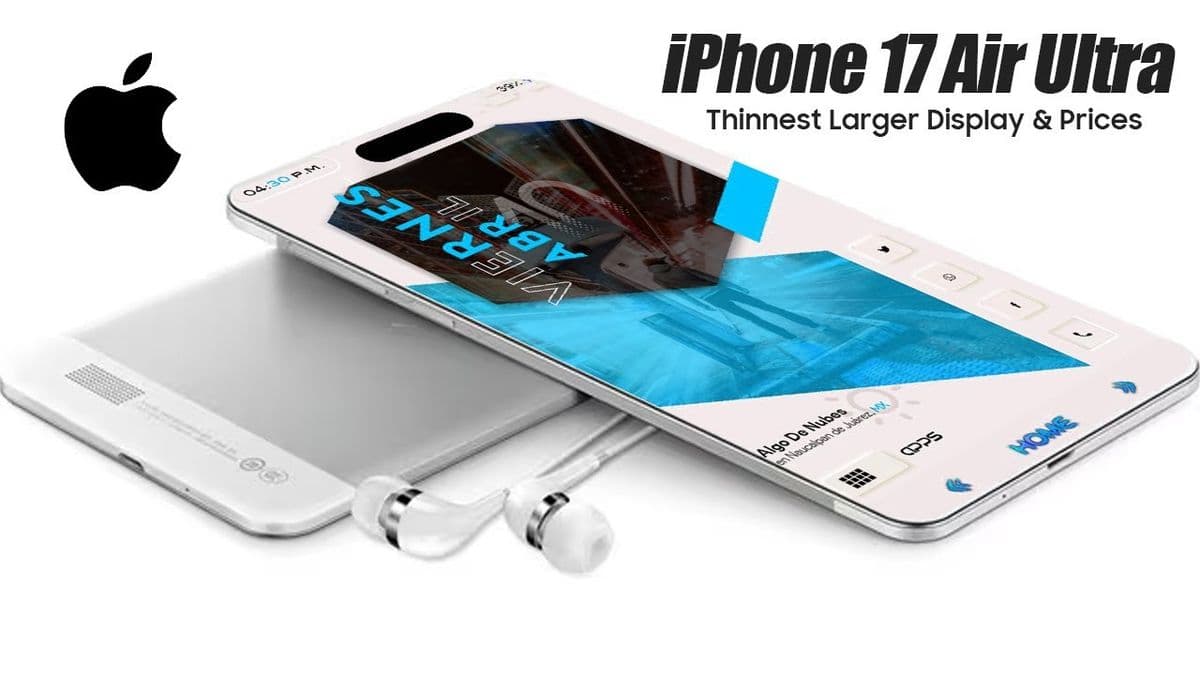
Apple has done it again — created a product category that didn't exist and immediately made you wonder how you lived without it. The iPhone 17 Air, announced alongside the standard iPhone 17 and 17 Pro at Apple's spring event, is the thinnest phone Apple has ever made at just 5.5mm — thinner than the original iPod Nano, thinner than most credit card wallets, thinner than seems physically possible for a device this capable.
Design and Build
Pick up the iPhone 17 Air and the first reaction is always the same: a sharp intake of breath. At 135 grams, it feels like holding a sheet of titanium-wrapped glass. The 6.6-inch OLED display (which Apple calls "ProMotion Flex" with 1-120Hz adaptive refresh) dominates the front, while the back features a single-lens camera system flush with the body — no camera bump for the first time since the iPhone 5.
Apple achieved this thinness through a combination of engineering breakthroughs: a custom stacked battery design that distributes cells across the entire chassis, a new A19 chip fabricated on TSMC's 2nm process (the smallest in any smartphone), and a redesigned Taptic Engine that's 60% smaller than the one in the iPhone 16. The SIM tray is gone entirely — it's eSIM only, worldwide.
The Compromises (and Lack Thereof)
The surprise is how few compromises Apple made. The single 48MP camera uses a sensor physically smaller than the iPhone 17 Pro's, but Apple's Neural Engine processing closes the gap to a degree that only pixel-peeping photographers will notice. Battery life is rated at 24 hours of video playback — matching the standard iPhone 17, which is 2mm thicker. Apple credits the 2nm chip's efficiency for this seemingly impossible feat.
The speaker system, using a new bone-conduction-assisted design, sounds remarkably full for a device this thin. The display brightness peaks at 2,500 nits outdoors. Face ID works through a refined TrueDepth system embedded under the display. It charges via MagSafe at 15W and supports Qi2 wireless charging.
Who Is This For?
Apple positions the Air between the standard iPhone 17 ($799) and iPhone 17 Pro ($1,099), pricing it at $899 for the 256GB base model. It's aimed at users who prioritize portability and design over the Pro's triple-camera system and ProRes video capabilities. In practice, it's the phone for people who want the best-looking iPhone in the room — and there are a lot of those people.
Pre-orders open March 14, with availability on March 28. Having spent a week with the device, I can say confidently: this is the iPhone that makes people stop and stare.