Nuclear Fusion Hits New Milestone as First Commercial Reactor Nears Completion
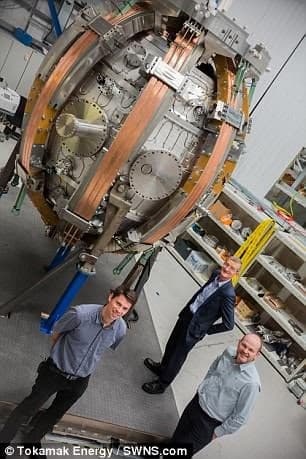
The race to harness the power of the sun took a dramatic leap forward this week as Commonwealth Fusion Systems (CFS) announced that its SPARC experimental reactor achieved a sustained plasma burn lasting over 30 minutes — shattering the previous record and signaling that commercial fusion energy may finally be within reach.
A Record-Breaking Burn
The milestone, achieved at the company's facility in Devens, Massachusetts, represents the longest sustained fusion reaction ever produced by a privately funded venture. During the test, the reactor maintained plasma temperatures exceeding 100 million degrees Celsius while generating net energy output — meaning the reaction produced more power than was required to sustain it.
"This is the moment we've been working toward for over a decade," said Dr. Maria Chen, CFS chief science officer, during a press briefing on Wednesday. "We've proven that our high-temperature superconducting magnets can contain a fusion reaction long enough and efficiently enough to make commercial power generation viable."
The achievement builds on a series of incremental successes. In late 2025, CFS demonstrated that its compact tokamak design could achieve ignition — the point at which a fusion reaction becomes self-sustaining. The latest test pushed the boundaries of duration and energy yield, two metrics that are critical for any future power plant.
What This Means for the Energy Landscape
Fusion energy has long been dismissed with the joke that it is always "30 years away." But the latest results from CFS, combined with progress at rival firms like TAE Technologies and Helion Energy, suggest the timeline has compressed dramatically.
The U.S. Department of Energy responded to the announcement by confirming an additional $1.2 billion in funding for fusion research over the next three years. Energy Secretary David Romero called the CFS result "a Sputnik moment for clean energy."
Unlike nuclear fission, which splits heavy atoms and produces long-lived radioactive waste, fusion combines light hydrogen isotopes and generates minimal waste. The fuel — deuterium and tritium — can be derived from seawater and lithium, making it virtually inexhaustible.
If fusion power plants become operational, they could provide baseload electricity without greenhouse gas emissions, complementing wind and solar in a decarbonized grid. Analysts at BloombergNEF estimate that fusion could supply up to 10 percent of global electricity by 2045 if commercialization proceeds on schedule.
The Road to 2028
CFS has already broken ground on ARC, its first commercial-scale reactor, at a site in Virginia. The company aims to connect the plant to the electrical grid by late 2028. If successful, ARC would be the world's first fusion power plant delivering electricity to consumers.
However, significant engineering challenges remain. Scaling up from an experimental reactor to a full power plant requires solving problems related to materials durability, heat management, and tritium breeding — the process by which the reactor produces its own fuel.
"We're not popping champagne just yet," cautioned Dr. Chen. "But we've crossed the most important scientific threshold. The remaining challenges are engineering problems, and engineering problems have engineering solutions."
Global Competition Heats Up
The United States is not alone in the fusion race. China's EAST tokamak set its own duration records in early 2026, and the European Union's ITER project in southern France continues to move toward its first plasma test, now expected in 2027.
Private investment in fusion has surged, with over $8 billion flowing into startups since 2020. Venture capital firms that once viewed fusion as too speculative are now treating it as a serious bet on the future energy market.
The geopolitical implications are significant. A country or company that cracks commercial fusion could reshape global energy markets, reduce dependence on fossil fuel imports, and gain enormous strategic advantage.
Skeptics Remain
Not everyone is convinced. Some physicists argue that the gap between a sustained plasma burn and a reliable, cost-effective power plant is wider than CFS suggests. Dr. Robert Linares, a plasma physicist at MIT who is not affiliated with CFS, noted that "maintaining a reactor for decades of continuous operation is a fundamentally different challenge than running a 30-minute experiment."
Still, the momentum is undeniable. For the first time, the question surrounding fusion energy has shifted from "if" to "when." And if this week's results are any indication, the answer may be sooner than most people expected.