The Population Cliff: Why Falling Birth Rates Are Reshaping the Global Economy
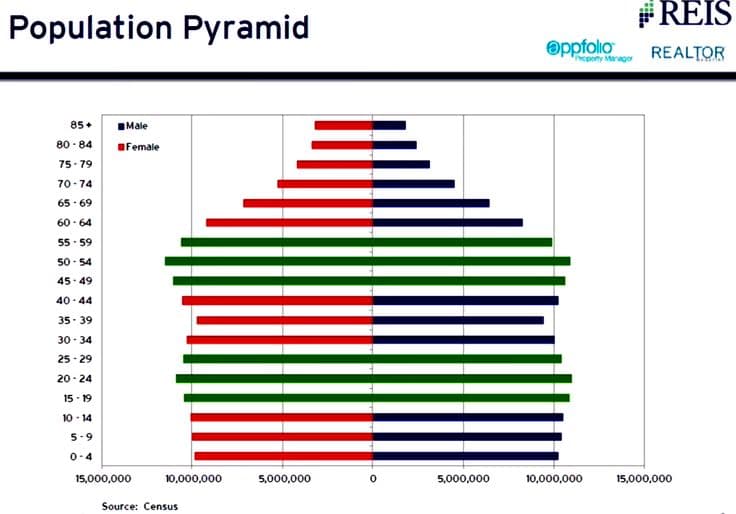
For most of human history, population growth was treated as an inevitability. Governments planned for expansion, economists modeled for more consumers, and urban planners designed for density. But a quiet revolution is underway: across much of the world, people are having fewer children than ever before, and the consequences are beginning to ripple through every facet of society.
The Numbers Tell a Stark Story
New data released by the United Nations Population Division in February 2026 reveals that the global fertility rate has fallen to 2.1 children per woman — exactly at replacement level — for the first time in recorded history. In practical terms, this means the world's population is on the verge of stabilizing and, in many regions, shrinking.
The declines are most pronounced in East Asia and Europe. South Korea's fertility rate has dropped to an astonishing 0.68, the lowest ever recorded by any nation. Japan stands at 1.15, Italy at 1.17, and Spain at 1.16. Even countries that historically had high birth rates are seeing rapid declines: India's rate fell below replacement level in 2025, and Brazil now sits at 1.5.
China, which abandoned its one-child policy in 2016, has seen birth rates continue to fall despite government incentives. The country recorded just 8.2 million births in 2025, down from 10.6 million in 2022 and nearly 18 million in 2016.
Economic Consequences Are Already Visible
The effects are not theoretical. Japan has been grappling with population decline for over a decade, closing thousands of schools and watching rural towns empty out. South Korea is projecting that its current population of 51 million could fall to 36 million by 2070.
Labor shortages are intensifying across developed economies. In Germany, an estimated 700,000 skilled positions remain unfilled. In the United States, which has a higher birth rate than most wealthy nations at 1.6, the Social Security Administration has warned that the trust fund could be depleted by 2033 without reforms — a timeline driven in part by a shrinking ratio of workers to retirees.
"The economic model of the 20th century was built on growth," said Dr. Sarah Langford, a demographer at the London School of Economics. "Pensions, healthcare systems, housing markets — they all assume a growing population. When that assumption breaks down, everything has to be rethought."
Why Are People Having Fewer Children?
The causes are numerous and interrelated. Rising costs of housing and childcare are frequently cited in surveys as primary deterrents. In the United States, the average annual cost of childcare for one child exceeds $15,000. In cities like New York, London, and Seoul, the combination of housing costs and stagnant wages makes raising a family feel financially impossible for many young adults.
Cultural shifts also play a role. Higher educational attainment, particularly among women, correlates strongly with lower fertility. Greater access to contraception and reproductive choice has given individuals more control over family planning. And in some societies, the traditional expectation that women bear the majority of domestic labor has made motherhood less appealing to those pursuing careers.
Climate anxiety is an emerging factor as well. Surveys consistently show that a significant percentage of young adults cite environmental concerns as a reason to delay or forgo having children.
Government Responses Vary Widely
Countries are responding with a range of policies. Hungary offers lifetime income tax exemptions to mothers of four or more children. Singapore provides cash grants of up to $10,000 per baby. South Korea recently announced a $48 billion demographic package that includes subsidized housing for young families and expanded parental leave.
Yet none of these initiatives have reversed the trend. Demographers note that once fertility rates fall below a certain threshold, they are extremely difficult to raise again. Financial incentives alone do not address the deeper social and cultural factors driving the shift.
Immigration has historically served as a demographic safety valve for wealthy nations, but that solution faces political headwinds. Anti-immigration sentiment has grown in many countries, and even nations open to migration are finding that source countries are themselves experiencing declining birth rates.
Rethinking the Future
Some economists argue that population decline is not inherently catastrophic. Fewer people could mean less strain on natural resources, lower carbon emissions, and higher per-capita wealth — if societies adapt their institutions accordingly.
Others are less optimistic. "The transition period is the danger zone," warned Dr. Langford. "We could be looking at decades of economic contraction, generational conflict over resources, and geopolitical instability as some nations shrink while others hold steady."
What is clear is that the demographic future most governments planned for is no longer coming. The question now is whether societies can adapt quickly enough to a world that is growing older, and smaller, with every passing year.