Dark Sky Reserves Are Fighting Back Against Light Pollution
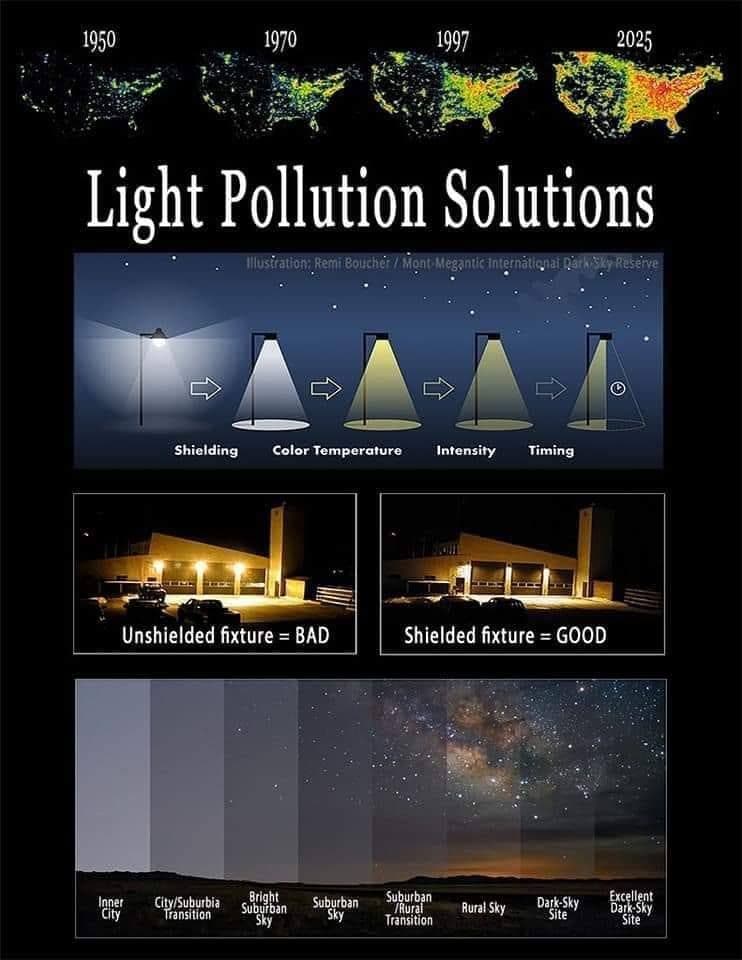
On a clear night far from city lights, the naked eye can see roughly 4,500 stars. In a typical suburb, that number drops to a few hundred. In a major city, you might count a few dozen. Light pollution, the excessive and misdirected use of artificial light, has erased the night sky for the vast majority of the world's population. Now, a growing network of dark sky reserves and new research on the health and ecological impacts of light pollution are driving a movement to reclaim the darkness.
The Scope of the Problem
A 2023 study published in Science found that light pollution is increasing at a rate of roughly 10 percent per year globally, far faster than previous estimates based on satellite data had suggested. The study, which relied on observations from citizen scientists, found that the sky is getting measurably brighter even in areas far from major urban centers.
The sources are everywhere. Streetlights, parking lot lights, commercial signage, sports facilities, and the blue-white glow of LED lighting, which has become the global standard due to its energy efficiency, all contribute. LEDs emit a broad spectrum of light that scatters more readily in the atmosphere than the warmer tones of older sodium lamps, making them particularly effective at brightening the night sky.
More than 80 percent of the world's population and 99 percent of people in the United States and Europe live under light-polluted skies. A third of humanity can no longer see the Milky Way.
Effects on Health and Ecosystems
The consequences extend far beyond lost stargazing. Research increasingly links artificial light at night to a range of health problems. The human body's circadian rhythm, the internal clock that regulates sleep, hormone production, and cellular repair, is calibrated by the natural cycle of light and darkness. Exposure to artificial light at night suppresses melatonin production, disrupts sleep, and has been associated with increased risks of obesity, diabetes, depression, and certain cancers.
A 2025 study from Harvard Medical School found that people living in neighborhoods with higher levels of outdoor light at night had a 13 percent higher incidence of breast cancer and a 25 percent higher incidence of prostate cancer compared to residents of darker neighborhoods, even after controlling for other risk factors.
The ecological damage is equally severe. Artificial light disrupts the behavior of insects, birds, sea turtles, and countless other species. Moths and other nocturnal insects are drawn to lights and die in enormous numbers, contributing to the global insect decline that threatens pollination and food webs. Migratory birds become disoriented by city lights, leading to fatal collisions with buildings. Sea turtle hatchlings, which navigate to the ocean by following the natural light of the horizon, are drawn inland by coastal lighting and perish.
The Dark Sky Movement
The International Dark-Sky Association, founded in 1988, has certified over 200 dark sky places worldwide, including parks, reserves, communities, and sanctuaries. These designations require jurisdictions to adopt lighting ordinances that minimize light pollution through measures like shielding fixtures to direct light downward, limiting brightness, and using warmer color temperatures.
In 2025, the movement achieved several notable milestones. The Scottish Highlands received one of Europe's largest dark sky park designations. In the United States, the Bureau of Land Management began incorporating dark sky protections into management plans for federal lands in the Southwest. Japan designated its first International Dark Sky Park on the island of Iriomote.
Communities near dark sky reserves have discovered an unexpected economic benefit. Astrotourism, travel motivated by stargazing, has become a significant revenue source. The town of Jasper in Alberta, Canada, which lies within the largest dark sky preserve in the world, estimates that its annual Dark Sky Festival generates over $2 million in local economic activity.
Practical Solutions
Reducing light pollution does not require eliminating outdoor lighting. It requires using light more intelligently. The most effective measures include shielding all outdoor fixtures so light is directed downward rather than into the sky, reducing the brightness of lights to the minimum necessary level, using warm-colored LEDs with color temperatures below 3000 Kelvin, installing timers and motion sensors to turn off lights when they are not needed, and replacing ornamental uplighting with downward-facing alternatives.
Several cities have adopted comprehensive lighting ordinances. Tucson, Arizona has required shielded, warm-colored outdoor lighting for decades and remains one of the darkest major cities in the United States. Flagstaff, Arizona became the world's first International Dark Sky Community in 2001. In Europe, France passed a national law in 2019 requiring businesses to turn off interior lights at night and restricting the brightness and timing of outdoor commercial lighting.
The Cultural Dimension
Beyond health and ecology, advocates argue that light pollution represents a cultural loss. For all of human history until the last century, the night sky was a shared experience that inspired mythology, navigation, science, and art. Losing access to the stars severs a connection to nature that has shaped human civilization.
Restoring dark skies is one of the most achievable environmental goals. Unlike carbon emissions or plastic pollution, light pollution stops the moment you turn off the light. The technology and policy tools to address it already exist. What is needed is the awareness and will to deploy them.