Paralympic Athletes Shatter Records as Funding and Recognition Reach New Heights
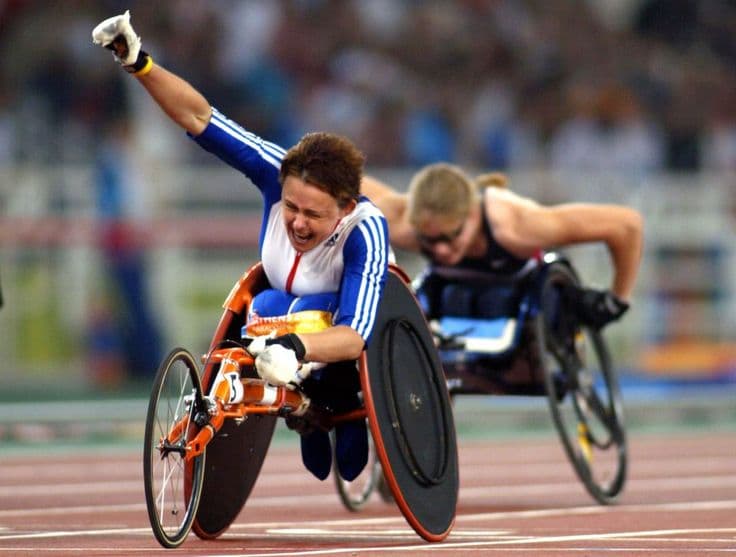
A Movement Gaining Momentum
The International Paralympic Committee released its annual report this week, and the numbers tell a story of transformation. Global television viewership of Paralympic events rose 34 percent in 2025 compared to the previous year. Corporate sponsorship revenue crossed the one-billion-dollar threshold for the first time. And the number of countries with dedicated Paralympic training programs has grown to 147, up from 112 just five years ago.
Behind these figures are the athletes themselves, whose performances have reached levels that are redefining perceptions of disability sport. "We are not an afterthought," said Oksana Masters, the multi-sport American Paralympian who has won medals in cycling, rowing, cross-country skiing, and biathlon. "We are elite athletes competing at the highest level. The world is starting to see that."
Record-Breaking Performances Across Disciplines
The past twelve months have produced a remarkable cluster of world records. In para athletics, Germany's Johannes Floors lowered his own 400-meter T62 world record twice in a single month, clocking 45.78 seconds at a Grand Prix event in Berlin. The time would have been competitive at many able-bodied national championships.
In para swimming, Australia's Alexa Leary set new benchmarks in the S8 50-meter and 100-meter freestyle events, performances that earned her nomination for the Laureus World Sportsperson of the Year with a Disability award.
And in wheelchair tennis, Japan's Shingo Kunieda, who came out of retirement last year at age 41, won his 29th Grand Slam singles title at the Australian Open in January, a feat that drew widespread mainstream media attention and trended globally on social media for two days.
"The level of competition is higher than it has ever been," said Andrew Parsons, president of the International Paralympic Committee. "Athletes are training with the same intensity, the same scientific support, and the same dedication as their Olympic counterparts. The results reflect that."
The Sponsorship Revolution
Perhaps the most significant shift has occurred in the commercial landscape. Major global brands including Nike, Toyota, Visa, and Allianz have all expanded their Paralympic sponsorship portfolios in the past year, with several signing individual athletes to contracts that rival those of mid-tier Olympic endorsers.
Masters, who signed a landmark deal with Nike in late 2025, spoke candidly about the change. "When I started, sponsors were not interested in Paralympic athletes. Period," she said. "Now, companies understand that our stories resonate with people. Disability is part of the human experience, and brands want to connect with that authenticity."
The IPC's media rights deal, renegotiated in 2025 for the 2026-2032 cycle, was valued at $890 million, a threefold increase from the previous agreement. The deal includes guaranteed minimum broadcast hours across 170 territories, ensuring that Paralympic events receive consistent coverage rather than being relegated to highlights packages.
Milano-Cortina 2026: A Proving Ground
All eyes now turn to the Milano-Cortina 2026 Winter Paralympics, scheduled for March 6-15, which organizers are billing as the most accessible and visible Winter Games in history. The Italian organizing committee has invested $45 million in accessibility infrastructure, including fully adapted athlete villages and spectator facilities.
The competition will feature 78 events across six sports, with para snowboard and para biathlon expected to draw the largest crowds. Norway's Birgit Skarstein, who competed at both the Summer and Winter Paralympics in different sports, is among the headline attractions and has become one of the movement's most recognizable ambassadors.
"Milano-Cortina has the potential to be a watershed moment," Parsons said. "The infrastructure, the broadcast coverage, the public interest, everything is aligned for these Games to reach more people than any Winter Paralympics before."
Challenges Remain
Despite the progress, advocates note that significant disparities persist. Classification systems remain a source of controversy, with some athletes and coaches arguing that the current framework does not adequately account for the spectrum of disabilities. Prize money at many international Para events still lags behind able-bodied equivalents, and access to high-performance coaching varies dramatically between nations.
In developing countries, the barriers are even more fundamental. Many athletes lack access to specialized equipment, and societal stigma around disability continues to limit participation in sport. The IPC's development program has allocated $30 million over the next four years to address these gaps, but experts acknowledge that systemic change will take a generation.
Still, the trajectory is unmistakable. Paralympic sport is growing faster than at any point in its history, driven by extraordinary athletes who refuse to accept limits, and a public that is finally paying attention.