The Capsule Wardrobe Movement Is Changing How America Gets Dressed
The average American owns 103 pieces of clothing. They wear roughly 20% of them on a regular basis. The rest occupy closet space, accumulate guilt, and eventually end up in landfills, where textiles now represent 7.7% of all solid waste.
A growing number of people have decided this equation no longer makes sense. The capsule wardrobe movement, which encourages building a wardrobe of 30 to 40 versatile, high-quality pieces that can be mixed and matched across seasons, has moved from minimalist blogs to mainstream culture. Searches for "capsule wardrobe" on Pinterest increased 210% year over year in early 2026, and retailers from Target to Nordstrom have launched dedicated capsule collections.
What a Capsule Wardrobe Actually Looks Like
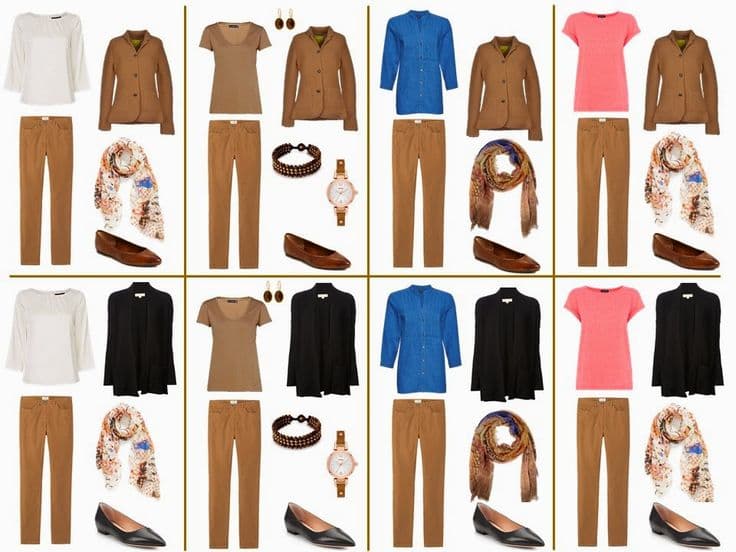
The concept is straightforward. A capsule wardrobe consists of a limited number of clothing items chosen for their versatility, quality, and ability to work together in multiple combinations. A typical capsule might include five bottoms, 15 tops, four outerwear pieces, three pairs of shoes, and a handful of accessories. Workout clothes, sleepwear, and special occasion items are usually excluded from the count.
The palette tends toward neutral and complementary tones, not because capsule adherents are allergic to color, but because a cohesive color scheme dramatically increases the number of viable outfit combinations from a limited set of pieces.
The Math of Less
The appeal becomes clear when you do the arithmetic. A wardrobe of 30 well-chosen pieces can generate hundreds of distinct outfits. A closet of 100 poorly coordinated items might produce a few dozen at best, which is why so many people with full closets complain they have nothing to wear.
The financial implications are equally compelling. Capsule wardrobe practitioners typically spend more per item but far less overall. Instead of buying 60 fast fashion garments at $15 each, they might invest in 30 quality pieces at $50 each. The annual spend drops from $900 to $1,500 per year, depending on the brands chosen, while the cost-per-wear plummets because every item actually gets used.
Why Now
The capsule wardrobe is not a new idea. Designer Donna Karan proposed a "Seven Easy Pieces" concept in 1985, and the term "capsule wardrobe" was coined by London boutique owner Susie Faux in the 1970s. But several converging forces have pushed the movement from niche to mainstream.
Decision fatigue has become a recognized feature of modern life. Research from Cornell University estimates that adults make approximately 35,000 decisions per day. Reducing morning wardrobe choices to a few minutes of combining reliable pieces offers a small but meaningful relief valve.
The Sustainability Connection
Environmental awareness has also played a significant role. The fashion industry accounts for roughly 10% of global carbon emissions and is the second-largest consumer of water worldwide. As consumers become more conscious of their environmental footprint, the appeal of buying fewer, better things has grown beyond the minimalism community.
The rise of visible mending, clothing swaps, and secondhand shopping platforms like ThredUp and Depop has created a cultural context in which owning less is increasingly seen as a mark of sophistication rather than deprivation.
The Resistance
Not everyone is sold. Critics argue that the capsule wardrobe movement carries an implicit class bias. Investing in high-quality basics requires upfront capital that many people simply do not have. A $200 pair of wool trousers might be a better long-term value than five $30 pairs from a fast fashion chain, but the person who can only afford the $30 pair does not have the luxury of that calculation.
There are also legitimate questions about whether the movement's aesthetic, which tends heavily toward neutral tones and understated silhouettes, inadvertently marginalizes the cultural traditions of communities where bold color, pattern, and adornment carry deep significance.
The Self-Expression Question
Fashion psychologists point out that clothing serves important psychological functions beyond mere coverage. Self-expression, mood regulation, identity signaling, and creative exploration are all legitimate uses of fashion that a highly constrained wardrobe may inhibit.
"There is a version of capsule wardrobing that becomes a kind of self-denial dressed up as virtue," says Dr. Carolyn Mair, author of "The Psychology of Fashion." "The key is whether you are choosing less because it genuinely serves your life or because you are performing minimalism for an audience."
The Industry Response
The fashion industry has responded to the trend with a mixture of genuine adaptation and cynical co-optation. Some brands have embraced the philosophy authentically, redesigning their collections around versatile pieces meant to work together across seasons. Everlane, COS, and Uniqlo have been particularly successful in positioning themselves as capsule-friendly brands.
Others have simply repackaged existing products with minimalist marketing language, slapping "capsule" labels on the same seasonal inventory they have always produced. Consumers have generally proven adept at distinguishing between the two approaches.
Building Your First Capsule
For those considering the transition, experienced practitioners recommend starting with an audit rather than a shopping spree. Pull everything out of your closet, identify what you actually wear, and look for gaps and redundancies. Most people discover they already own the core of a capsule wardrobe buried under layers of impulse purchases and aspirational buys.
The process of paring down can be uncomfortable. Clothing carries emotional weight: the dress from that vacation, the jacket you bought for an interview, the jeans you will fit into again someday. Letting go of these items often requires confronting the gap between who you are and who you imagined you would be.
But for the millions who have made the shift, the payoff is tangible. Less time deciding, less money spent, less waste generated, and a closet where everything fits, everything coordinates, and everything gets worn. In a culture defined by excess, choosing less has become its own form of luxury.