Institutional Crypto Custody Evolves as Banks and Fintechs Compete for Market Share
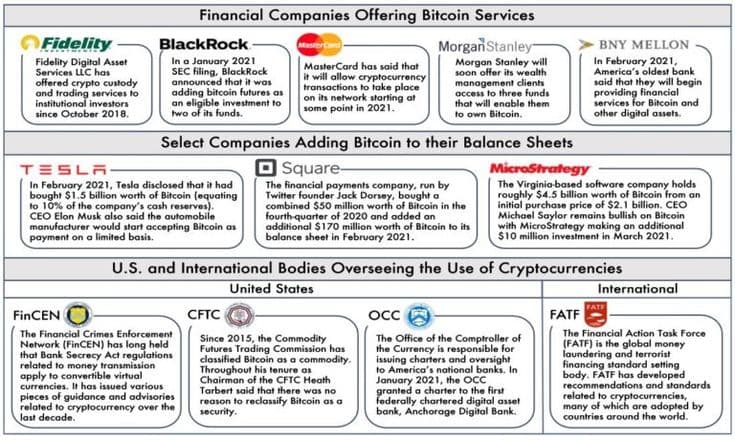
The institutional crypto custody market has reached a pivotal moment. With digital assets under professional custody surpassing $500 billion globally, the battle between crypto-native custodians and traditional financial institutions is intensifying. The winner will control the infrastructure layer that underpins the next phase of institutional crypto adoption.
The Custody Imperative
For institutional investors, custody is not optional. Regulatory frameworks across the United States, European Union, and Asia require that funds, banks, and asset managers hold client assets with qualified custodians. In traditional finance, custody is a mature, low-margin business dominated by a handful of global banks. In crypto, it remains fragmented, fast-evolving, and central to the industry's growth trajectory.
The stakes are enormous. As pension funds, sovereign wealth funds, and insurance companies increase their crypto allocations, the custodian they choose becomes the gatekeeper for billions in capital flows. Custody providers that can offer security, regulatory compliance, and seamless access to DeFi and staking will capture outsized market share.
Crypto-Native Leaders
Fireblocks has established itself as the dominant infrastructure provider for institutional crypto operations. The company's platform, which combines MPC-based key management with a network of exchange and DeFi integrations, now supports over 1,800 institutional clients and has facilitated more than $6 trillion in cumulative transfers.
Fireblocks recently expanded its offering to include direct DeFi access, allowing institutions to interact with lending protocols, decentralized exchanges, and liquid staking platforms through the same interface they use for custody and settlement. This integration of custody with DeFi access has become a key competitive differentiator.
BitGo, another crypto-native custodian, has focused on the regulated trust company model, securing a New York trust charter and qualifying as a custodian under the Investment Advisers Act. The company's emphasis on regulatory compliance has made it a preferred partner for registered investment advisors and fund administrators.
Anchorage Digital, the first federally chartered crypto bank in the United States, offers a unique value proposition by combining custody with banking services including lending, staking, and governance participation. The company has seen significant growth in its institutional staking business, where clients delegate their crypto assets through Anchorage while maintaining full custody protections.
Banks Enter the Arena
The most consequential development in the custody landscape is the entry of traditional banking giants. BNY Mellon, the world's largest custodian bank with over $47 trillion in assets under custody, launched its digital asset custody platform in 2024 and has been steadily expanding its crypto capabilities.
The bank now supports custody for Bitcoin, Ethereum, and a growing list of additional digital assets. More importantly, BNY Mellon offers crypto custody as an integrated component of its existing custody infrastructure, meaning institutional clients can manage their traditional and digital assets through a single platform and reporting framework.
State Street, Northern Trust, and Citibank have all accelerated their digital asset custody programs in response. State Street's partnership with Taurus, a Swiss digital asset infrastructure provider, has enabled the bank to offer tokenized asset custody alongside traditional crypto storage. Northern Trust's alliance with Standard Chartered's Zodia Custody gives it access to a purpose-built digital asset custody solution with global reach.
The Technology Battle
The underlying technology of crypto custody is evolving rapidly. Multi-party computation (MPC), which distributes key material across multiple parties so that no single entity ever holds a complete private key, has become the industry standard for institutional-grade custody. However, new approaches are emerging.
Threshold signature schemes (TSS) offer similar security properties to MPC but with better compatibility with blockchain-native signing protocols. Several custodians are migrating from MPC to TSS-based architectures to reduce signing latency and support a broader range of blockchain networks.
Hardware security modules (HSMs) remain popular among traditional banks, which are familiar with the technology from their existing operations. Some custodians use hybrid architectures that combine HSMs for key storage with MPC or TSS for signing operations.
The advent of smart contract wallets and account abstraction on Ethereum has also created new custody models. Institutional smart contract wallets can enforce complex signing policies, spending limits, and whitelisting rules at the protocol level, providing an additional security layer beyond the custodian's own infrastructure.
Regulatory Landscape
The regulatory environment for crypto custody varies significantly by jurisdiction. In the United States, the SEC's SAB 121 guidance, which required banks to record custodied crypto assets as liabilities on their balance sheets, was effectively neutralized by congressional action in late 2025. This change removed a major obstacle for banks seeking to offer crypto custody services.
The EU's Markets in Crypto-Assets (MiCA) regulation provides a clear framework for crypto custody providers operating in Europe, requiring registration, capital reserves, and segregation of client assets. The regulatory clarity has attracted several new entrants to the European custody market.
In Asia, Singapore and Hong Kong have emerged as leading jurisdictions for institutional crypto custody, with both offering licensing regimes that balance innovation with investor protection.
Consolidation Ahead
The custody market appears ripe for consolidation. The combination of high infrastructure costs, regulatory compliance burdens, and the need for global coverage creates significant economies of scale that favor larger players. Several mid-sized custodians are rumored to be exploring mergers or acquisitions, and at least two major deals are expected to close before the end of 2026.
For institutional investors evaluating custody solutions, the key considerations include security architecture, regulatory status, asset coverage, DeFi integration capabilities, and the ability to support emerging use cases like tokenized securities and cross-chain operations. The custodian that best integrates these capabilities into a seamless institutional experience will likely dominate the next decade of digital asset growth.