Nvidia Blackwell Ultra GPUs: The B300 Chips Powering the AI Revolution
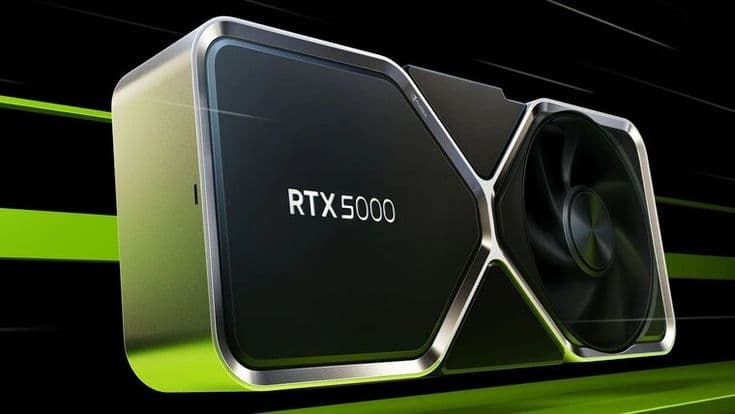
Nvidia continues to dominate the AI hardware landscape with the Blackwell Ultra B300 series, a line of GPUs that has become the backbone of AI training infrastructure worldwide. As demand from hyperscalers, startups, and sovereign AI initiatives continues to surge, the B300 chips represent both a technical marvel and a bottleneck in the global race to build AI systems.
B300 Specifications and Performance
The Blackwell Ultra B300 builds on the original Blackwell architecture with significant enhancements to memory bandwidth, compute density, and energy efficiency. Each B300 GPU features 288 GB of HBM3e memory, a substantial increase that allows larger AI models to fit within a single GPU's memory space, reducing the complexity and cost of distributed training.
In terms of raw compute, the B300 delivers approximately 2.5 times the AI training performance of the previous-generation H100, Nvidia's workhorse chip that defined the early phase of the AI infrastructure boom. For inference workloads, the gains are even more pronounced, with the B300 achieving up to 4 times the throughput per watt compared to its predecessor.
Nvidia has also introduced a new interconnect technology called NVLink 6, which allows up to 576 GPUs to communicate as a single unified system. This massive scale-up capability is essential for training the next generation of frontier AI models, which are expected to require clusters of thousands of GPUs working in concert.
Data Center Demand Outpaces Supply
The appetite for B300 GPUs has been extraordinary. Major cloud providers including Amazon Web Services, Microsoft Azure, Google Cloud, and Oracle have all placed massive orders, with delivery timelines stretching well into 2027 for some customers. The demand is not limited to American tech giants. Sovereign AI programs in the European Union, Japan, India, and the Middle East are all competing for allocation.
This demand has created a supply chain challenge that extends beyond Nvidia itself. TSMC, which manufactures the B300 chips using its advanced 3nm process, has dedicated significant production capacity to Nvidia but still struggles to keep pace. The advanced packaging technology required for HBM3e integration adds another bottleneck, as only a handful of facilities worldwide can perform this assembly at scale.
Nvidia CEO Jensen Huang has described the current demand environment as "insatiable," noting that every major industry is now investing in AI infrastructure. From pharmaceutical companies training models for drug discovery to financial institutions building AI-powered trading systems, the customer base for high-end GPUs has expanded far beyond traditional tech companies.
The Economics of AI Computing
The B300's pricing reflects its position at the top of the market. Individual GPUs are estimated to cost between $30,000 and $40,000, with complete systems like the DGX B300 running into the hundreds of thousands of dollars. Despite these prices, the total cost of ownership argument is compelling. The B300's improved efficiency means that customers can achieve the same training results using fewer chips and less electricity, translating to lower overall costs for large-scale deployments.
Energy consumption has become a critical concern in the AI industry. A single large-scale AI training run can consume as much electricity as a small city over the course of weeks. The B300's improved performance per watt addresses this concern directly, though the absolute energy requirements continue to grow as models become larger and more complex.
Competition and the Road Ahead
While Nvidia's dominance in the AI GPU market remains unchallenged, competitors are gaining ground. AMD's Instinct MI400 series offers compelling performance at lower price points, and custom chips from Google, Amazon, and Microsoft provide alternatives for their respective cloud platforms. Startups like Cerebras and Groq continue to push novel architectures that challenge the conventional GPU paradigm.
Nvidia's advantage lies not just in hardware but in its software ecosystem. CUDA, the company's parallel computing platform, has been the industry standard for over a decade, and the vast library of optimized AI frameworks built on CUDA creates significant switching costs for developers and organizations invested in the Nvidia ecosystem.
What It Means for the Industry
The Blackwell Ultra B300 is more than a product launch. It is a signal of where the technology industry is heading. The scale of investment in AI infrastructure suggests that major technology companies expect artificial intelligence to be the defining technology of the coming decade, and they are willing to spend billions to ensure they are not left behind.
For enterprises evaluating their AI strategies, the message is clear. Access to cutting-edge compute will remain a competitive advantage, and the organizations that secure GPU capacity today will be best positioned to capitalize on AI breakthroughs tomorrow.