Tiny Home Communities Are Going Mainstream as Cities Rewrite Zoning Laws
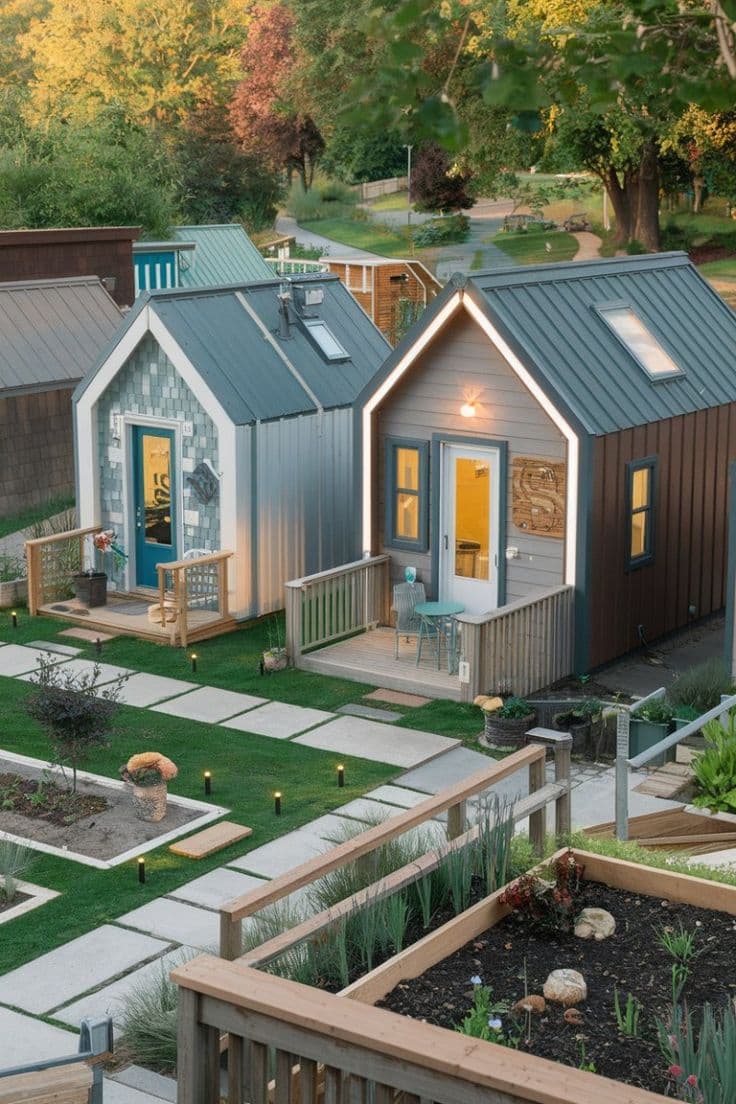
For years, tiny homes occupied an awkward position in American housing. They were beloved by minimalists, featured endlessly on reality television, and celebrated as a creative response to unaffordable real estate. But actually living in one full-time was a legal nightmare in most jurisdictions. Zoning codes written for conventional housing made it illegal to place a 400-square-foot dwelling on most residential lots, and tiny home owners found themselves in constant conflict with local building departments.
That is changing. In 2026, a growing number of cities and counties have rewritten their zoning ordinances to explicitly accommodate tiny home communities, and the results are reshaping what affordable, intentional living looks like in practice.
The Zoning Breakthrough
The shift began in earnest in 2024 when California passed AB 1033, which streamlined the permitting process for small dwelling units and tiny home communities statewide. Oregon, Colorado, and Texas followed with similar legislation. By early 2026, at least 18 states have passed laws that either mandate or encourage local governments to create zoning categories for tiny home developments.
The key innovation is the concept of the "tiny home community" as a distinct land use category, separate from mobile home parks, single-family residential zones, and RV campgrounds. This distinction matters because it allows developers and residents to design communities with shared amenities, common spaces, and infrastructure tailored to small-footprint living rather than trying to squeeze tiny homes into regulatory frameworks designed for something entirely different.
What These Communities Look Like
Modern tiny home communities bear little resemblance to the DIY trailer parks of the movement's early days. The newest developments are professionally designed, often by architects who specialize in small-space living, and feature a mix of unit sizes ranging from 200 to 600 square feet.
Community of Communities, a development outside Austin, Texas, opened in late 2025 with 85 tiny homes arranged around a central green space. Each home sits on its own small lot with a private patio, but residents share a full-sized commercial kitchen, laundry facilities, a workshop, a fitness room, and a community garden. Monthly costs, including lot rent, utilities, and access to shared amenities, run between $800 and $1,200, roughly half the median rent for a one-bedroom apartment in the Austin metro area.
Similar projects have opened or broken ground in Asheville, North Carolina; Boise, Idaho; Portland, Oregon; and several communities in the greater Denver area. The model varies by location, with some developments offering homes for purchase and others operating as rental communities, but the shared amenity structure is consistent.
Who Lives There
The demographic profile of tiny home community residents defies easy categorization. Early assumptions that tiny homes would appeal primarily to young, single minimalists have proven incomplete.
Retirees represent a significant and growing segment. For older adults on fixed incomes, tiny homes offer an owned or affordable rented dwelling with lower maintenance demands and built-in social infrastructure. Several communities have been designed specifically for seniors, with accessibility features, on-site wellness programming, and proximity to medical services.
Young professionals priced out of conventional housing markets are another major demographic. In cities like Austin, Denver, and Portland, where median home prices exceed $500,000, a tiny home in a well-designed community offers a path to stability without the crushing burden of a traditional mortgage.
Single parents, remote workers, downsizing couples, and people recovering from housing instability also make up meaningful portions of these communities. The common thread is not a shared lifestyle philosophy but a practical need for affordable, dignified housing with a sense of community.
The Economic Model
Tiny home communities work financially because they challenge several assumptions embedded in conventional housing development. The homes themselves cost between $45,000 and $120,000 depending on size, finishes, and whether they are built on foundations or trailers. Land costs per unit are dramatically lower because the lots are smaller and more densely arranged.
Shared amenities reduce per-unit costs for features that would be prohibitively expensive in individual homes. A commercial kitchen that serves 80 households costs far less per person than 80 individual gourmet kitchens. A shared workshop eliminates the need for 80 garages. Community laundry rooms replace 80 individual washer-dryer setups.
For developers, the model is attractive because construction timelines are shorter, material costs are lower, and demand is strong. Several real estate investment firms have entered the tiny home community space in the past year, bringing institutional capital and professional management to what was previously a grassroots movement.
Challenges That Remain
The path forward is not without obstacles. Building codes still vary significantly between jurisdictions, and even in states with enabling legislation, individual municipalities can create barriers through local ordinances, permitting delays, and neighborhood opposition.
Community opposition, often framed as concerns about property values or neighborhood character, remains the most persistent challenge. Many tiny home developments face organized resistance from nearby homeowners who associate small dwellings with transience or poverty. Overcoming this opposition requires patient education, transparent community design, and demonstrated success from existing projects.
There are also quality concerns. As the market grows, lower-quality builders have entered the space, producing homes with inadequate insulation, questionable electrical work, and materials that do not hold up over time. Industry standards and certification programs are developing but remain inconsistent.
A Housing Solution, Not a Housing Panacea
Tiny home communities will not solve the housing crisis on their own. They serve a specific segment of the market, people who are willing to trade square footage for affordability and community, and they require land, infrastructure, and regulatory support that is not universally available.
But they represent something important: proof that we can build housing differently when we are willing to question the assumptions that have governed residential development for decades. The idea that every household needs 2,000 square feet, a two-car garage, and a private lawn is not a law of nature. It is a policy choice, and in 2026, more communities are choosing differently.