Decentralized Storage Networks Filecoin and Arweave Compete for Enterprise Data
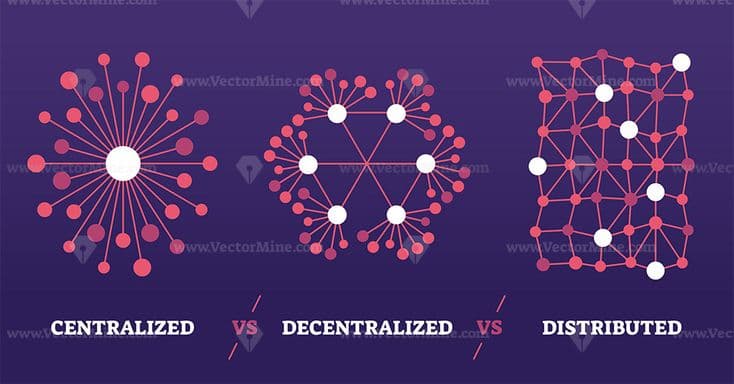
The global cloud storage market generates over $100 billion in annual revenue, dominated by Amazon Web Services, Google Cloud, and Microsoft Azure. Decentralized storage networks have long aspired to capture a share of this market, and in 2026, that aspiration is beginning to materialize as Filecoin and Arweave attract meaningful enterprise adoption with fundamentally different approaches to data persistence.
Two Philosophies of Storage
Filecoin and Arweave represent contrasting visions of how decentralized storage should work. Filecoin operates a rental model similar to traditional cloud storage, where users pay storage providers to store data for specified periods. Deals are negotiated on-chain, and cryptographic proofs ensure that providers are actually storing the data they committed to.
Arweave takes a radically different approach with its permanent storage model. Users pay a one-time fee to store data on the Arweave network, and the protocol's endowment mechanism is designed to fund storage in perpetuity. The upfront cost is higher than Filecoin's rental rates, but there are no recurring fees and no risk of data loss due to expired contracts.
These philosophical differences attract different use cases. Filecoin appeals to organizations with large volumes of data that may need to be updated or eventually deleted. Arweave attracts users who need guaranteed permanence, such as archivists, researchers, and compliance teams storing regulatory records.
Filecoin's Enterprise Push
Filecoin has aggressively pursued enterprise adoption in 2026. The network now stores over 2.5 exabytes of data, making it one of the largest distributed storage systems in the world. While early adoption was driven primarily by crypto-native projects and academic researchers, enterprise clients now account for a growing share of storage deals.
The introduction of Filecoin's InterPlanetary Consensus framework has improved the network's performance characteristics, enabling faster retrieval times that are essential for enterprise use cases. Hot storage solutions built on top of Filecoin now deliver retrieval speeds comparable to centralized alternatives, addressing one of the historical criticisms of decentralized storage.
Pricing remains Filecoin's strongest selling point. Storage costs on the network are typically 80 to 95 percent lower than equivalent capacity on AWS S3. For organizations storing petabytes of archival data, the cost savings can amount to millions of dollars annually. Several media companies have migrated cold storage archives to Filecoin, maintaining copies on centralized providers only for frequently accessed content.
Arweave and the Permanence Premium
Arweave has carved out a distinct niche by focusing on data permanence. The network stores over 200 terabytes of data that is designed to persist indefinitely, including news articles, scientific papers, government records, and blockchain state data.
The launch of AO, Arweave's computing layer, has transformed the network from a simple storage system into a full computing platform. AO enables applications to run computations on permanently stored data, opening use cases that neither Filecoin nor traditional cloud providers can replicate. Developers can build applications where both the data and the application logic are permanently preserved on the network.
Several decentralized applications have adopted Arweave as their primary data layer, storing application state and user content on the permanent web rather than on centralized servers that could be shut down or censored. This architectural choice provides a level of censorship resistance and data sovereignty that is impossible with traditional cloud infrastructure.
The Redundancy and Reliability Question
Enterprise adoption of decentralized storage hinges on reliability. Organizations need assurance that their data will be available when needed, with uptime guarantees comparable to the 99.99 percent availability offered by major cloud providers.
Both Filecoin and Arweave address this through different mechanisms. Filecoin's proof-of-replication system requires storage providers to demonstrate that they maintain unique copies of stored data. The network's deal-making system allows clients to specify redundancy levels, storing data with multiple providers across different geographic regions.
Arweave's mining incentive structure encourages the network to maintain multiple copies of all stored data. Miners who store rare data that few other nodes hold receive higher rewards, creating a natural incentive for comprehensive replication across the network.
Hybrid Architectures
In practice, many organizations are adopting hybrid storage architectures that combine decentralized and centralized solutions. Frequently accessed hot data remains on traditional cloud providers for performance reasons, while archival data migrates to Filecoin or Arweave for cost savings and permanence guarantees.
Several startups have built middleware layers that abstract the complexity of managing data across multiple storage backends. These tools allow organizations to define storage policies based on access patterns, compliance requirements, and cost targets, automatically routing data to the most appropriate infrastructure.
Regulatory and Compliance Considerations
Decentralized storage introduces novel regulatory questions. Data residency requirements in jurisdictions like the European Union mandate that certain data be stored within specific geographic boundaries. Both Filecoin and Arweave are developing mechanisms to allow clients to specify geographic constraints on where their data is stored, though implementation details vary.
The right to deletion, enshrined in regulations like GDPR, creates a philosophical tension with Arweave's permanence model. Arweave has argued that encrypted data with destroyed keys is effectively deleted, but this interpretation has not been tested in court. Filecoin's time-limited storage deals align more naturally with deletion requirements.
The Storage Wars Ahead
The competition between Filecoin, Arweave, and centralized providers is intensifying as enterprises become more comfortable with decentralized infrastructure. Neither decentralized network is likely to replace AWS in the near term, but both are establishing themselves as viable alternatives for specific use cases where cost, permanence, or censorship resistance matters more than raw performance and convenience. The market is large enough that multiple winners can coexist, each serving the storage needs that their architecture handles best.